
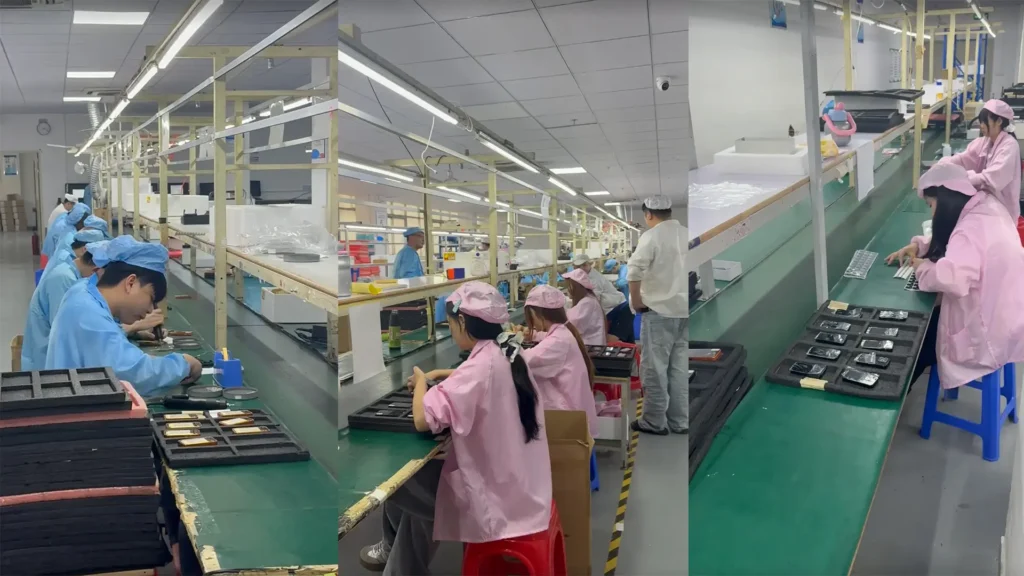
The translation-device industry is changing.
The traditional translation device focused mainly on converting one language into another.
Modern AI devices are becoming much more multifunctional.
Voice
Real-time voice translation remains one of the most important functions.
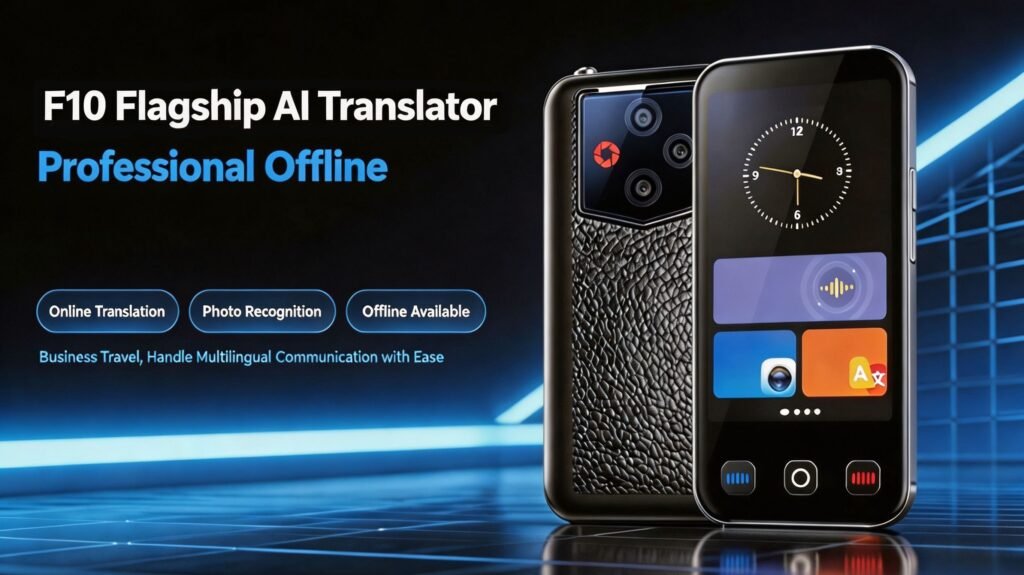
Images
Camera-based translation allows users to translate menus, signs, documents and product information.
Both F10 and F80 support Photo Translation.
Recording
F10 supports recording-to-text, real-time translation and conversation playback.
F80 also supports intelligent recording translation with playback.
AI Assistants
F10 and F80 both include AI assistants, moving the product beyond traditional translation.
Connectivity
F80’s SIM-card capability illustrates another direction: translation devices can become more independent mobile communication terminals.
Offline AI
Offline translation is also becoming increasingly important.
Our F10 and F80 both provide 27 offline languages.
The market is also seeing major translation-device companies emphasize offline AI and edge processing. For example, Timekettle currently promotes its T1 handheld translator around an AI edge model and offline translation.
Wearables Are Growing
Translation technology is also moving into earbuds and other wearable hardware.
Current industry products include handheld translators, interpreter earbuds and meeting-focused AI interpretation hubs.
This does not necessarily mean handheld devices will disappear.
Different form factors solve different problems.
Handheld products remain particularly useful when users need:
- A visible screen
- Camera translation
- Text translation
- Physical controls
- Longer interaction
- Offline functionality