

The biggest change in the translation-device industry may not be a single new language or translation engine.
It may be the disappearance of the boundary between translation devices and general AI hardware.
Google is bringing speech-to-speech translation into Gemini and Google Translate. Apple is integrating Live Translation into AirPods. Meta is expanding translation through AI glasses. Samsung and Google are developing intelligent eyewear with real-time translation.
Together, these developments point toward one direction: translation is becoming a standard AI capability.
This does not necessarily make dedicated translation devices obsolete.
Instead, it raises the standard.
A dedicated translation product needs to offer something more focused than a smartphone application.
That can include offline translation, physical controls, dedicated microphones, bilingual screens, recording, photo translation, SIM connectivity, travel tools, and specialized communication workflows.
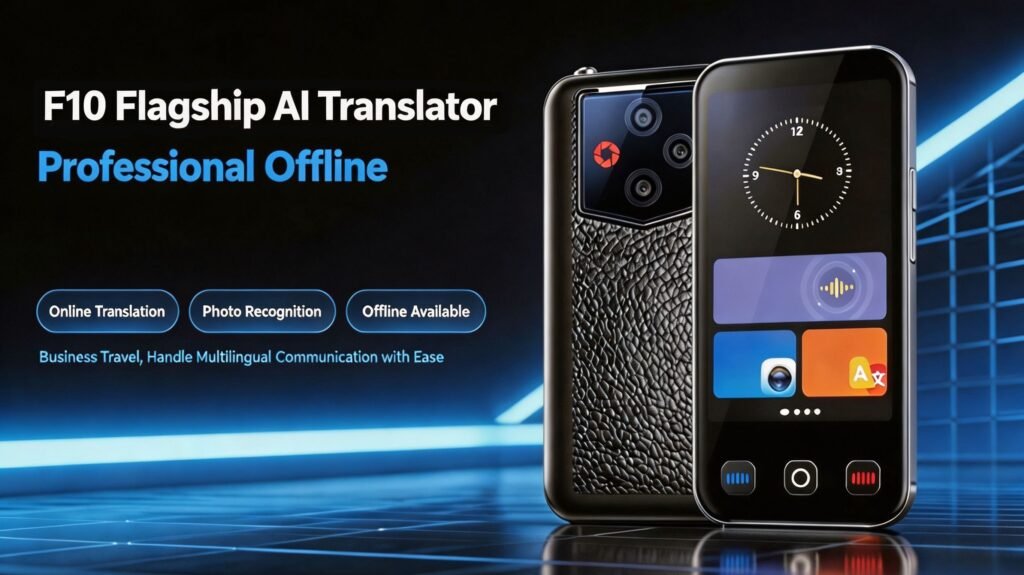
F10 and F80 are examples of this broader approach.
F10 combines 139-language real-time translation with offline translation, photo translation, recording translation, two-way interpretation, bilingual subtitles, AI assistance, world time, and currency conversion.
F80 supports 150+ online languages, nine dialects, 27 offline languages, video-call translation, photo translation, recording translation, text translation, and SIM connectivity.
The future translation device may therefore look less like a “digital dictionary” and more like a portable AI communication terminal.
For OEM and ODM customers, this is especially important.
Future product development should not begin with the question “How many languages can we support?”
A better question is:
What communication problems can this device solve for a specific group of users?
That shift—from translation capability to communication experience—may define the next generation of translation products.