
When people think about translation devices, travel is often the first application that comes to mind.
Airports, hotels, restaurants, tourist attractions, and everyday conversations have traditionally represented the core use cases for portable translators.
However, advances in speech recognition and AI translation are pushing translation hardware into more professional environments.
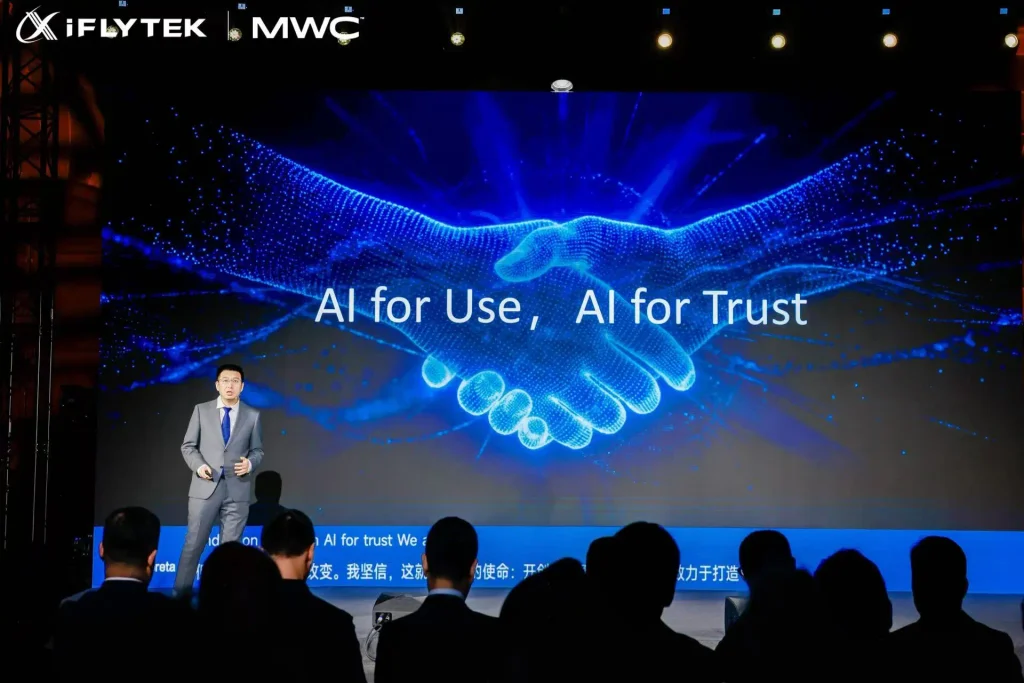
At MWC 2026, iFLYTEK introduced its AI Interpret Mic, targeting scenarios including international business meetings, diplomatic communication, and multilingual negotiations.
The development highlights an important trend:
AI translation is becoming a professional business tool rather than simply a travel accessory.
Why Do Professional Meetings Need Dedicated Translation Hardware?
Modern smartphones already provide translation functions. So why would companies need dedicated translation equipment?
The answer lies in the complexity of professional communication.
A typical travel conversation may involve two people speaking relatively short sentences.
An international business meeting can involve:
- Multiple speakers
- Several languages
- Long conversations
- Technical terminology
- Company names and product specifications
- Background noise
- Negotiations and discussions
- Continuous speech
A professional translation device can therefore be designed specifically around these conditions.
Real-Time Text Can Be Critical in Business Communication
According to iFLYTEK, the AI Interpret Mic is designed to recognize and translate speech during meetings and negotiations while displaying translated text on the device.
This approach is particularly useful when participants need to verify specific information.
For example, business communication can involve numbers, product specifications, prices, technical terms, names, and contractual details.
In these situations, translated text can provide an additional reference alongside spoken interpretation.
Enterprise Translation Is Also About Data and Workflow
Another major difference between consumer and enterprise translation is data management.
A business meeting may contain:
- Product development information
- Pricing
- Customer information
- Supply-chain details
- Technical specifications
- Business strategies
- Contract discussions
As AI translation becomes more deeply integrated into business processes, companies are likely to pay increasing attention to how translation data is processed and stored.
This means enterprise translation products may need to consider not only translation quality but also:
- Data security
- Recording management
- Access control
- Offline capabilities
- Workflow integration
- Translation history
- Meeting documentation
From Translation Device to Communication Terminal
This trend is also reflected in the development of our F10 AI Translation Device.
F10 supports 139-language real-time translation and 27 offline language packages. Beyond voice translation, it supports speech-to-text recording, real-time translation, two-way simultaneous interpretation, bilingual subtitles, complete conversation recording, and translation playback.
These capabilities allow a translation device to support the entire communication process rather than simply translating individual sentences.
For example, a salesperson visiting an overseas customer could use the device for real-time communication and then review recorded translated conversations afterward.
F80 Expands Translation Into Remote Communication
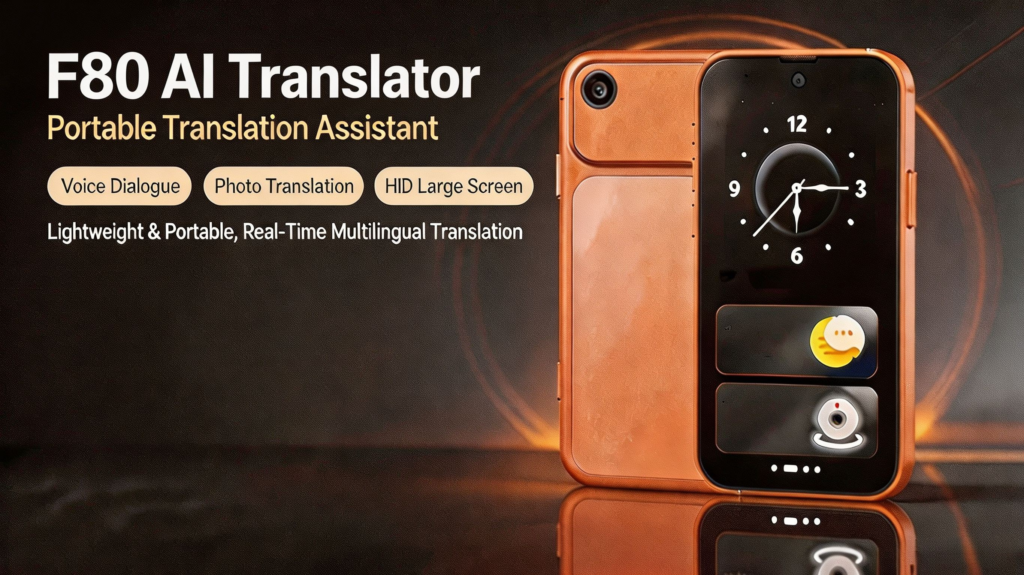
Our F80 AI Translation Device focuses more heavily on connected communication.
It supports more than 150 online languages and nine dialects, together with 27 offline languages. The device also supports SIM-card connectivity, video-call translation, photo translation, text input, recording translation, simultaneous interpretation, and an AI assistant.
This expands translation beyond face-to-face conversations.
Instead of only solving:
“How can I communicate with an international customer in person?”
a connected translation device can also address:
“How can I communicate with an international customer remotely?”
A New Opportunity for Translation Device OEM
For OEM manufacturers, this shift creates new product categories.
Different customers may need different combinations of hardware and software:
Travel: Voice + Photo + Offline Translation
Business: Voice + Recording + Translation
Enterprise: Translation + Data Management + Meeting Support
International Events: Multi-user Translation + Subtitles
This makes modular product development increasingly important.
OEM customers may want to customize hardware design, connectivity, software functions, translation services, recording capabilities, or user interfaces according to their target market.
The Future of Enterprise Translation
iFLYTEK’s AI Interpret Mic demonstrates how AI translation is moving beyond consumer travel scenarios and into professional communication.
As AI speech recognition and machine translation continue to improve, dedicated translation hardware may increasingly become part of the infrastructure used for international business.
The key question for the industry is no longer simply:
“How many languages does the device support?”
It is increasingly:
“How effectively does the device solve real communication problems?”