
Real-time translation is moving beyond the traditional model of speech recognition → machine translation → synthesized voice.
In 2026, Alibaba Cloud introduced Qwen3.5-LiveTranslate-Flash, a real-time audio and video translation model designed to process both speech and visual information. According to Alibaba Cloud, the system supports 60 languages, including 29 languages with both audio and text output.
One of the more interesting developments is its use of visual context.
Instead of interpreting speech completely independently, the model can analyze visual information such as lip movements, gestures and on-screen text. This can help resolve ambiguous words or situations where audio alone does not provide enough context.
Voice Cloning Changes the Translation Experience
Another important capability is voice cloning.
Qwen3.5-LiveTranslate-Flash can generate translated speech using a cloned version of the original speaker’s voice. Alibaba Cloud describes applications including conferences, live streaming and video dubbing.
This represents a shift in the way translated speech can be presented.
Traditional translation systems often replace the original speaker’s voice with a generic synthesized voice. Voice cloning attempts to preserve more of the speaker’s vocal identity, making translated communication feel more continuous.
For international meetings, business conversations and multilingual customer interactions, this type of technology could become increasingly relevant.
What This Means for AI Translation Devices
The development also provides an important direction for dedicated translation hardware.
A modern translation device does not need to be limited to simple phrase conversion. It can combine:
- Voice recognition
- Real-time translation
- Text subtitles
- Visual information
- Recording
- AI assistance
- Two-way interpretation
- Offline translation
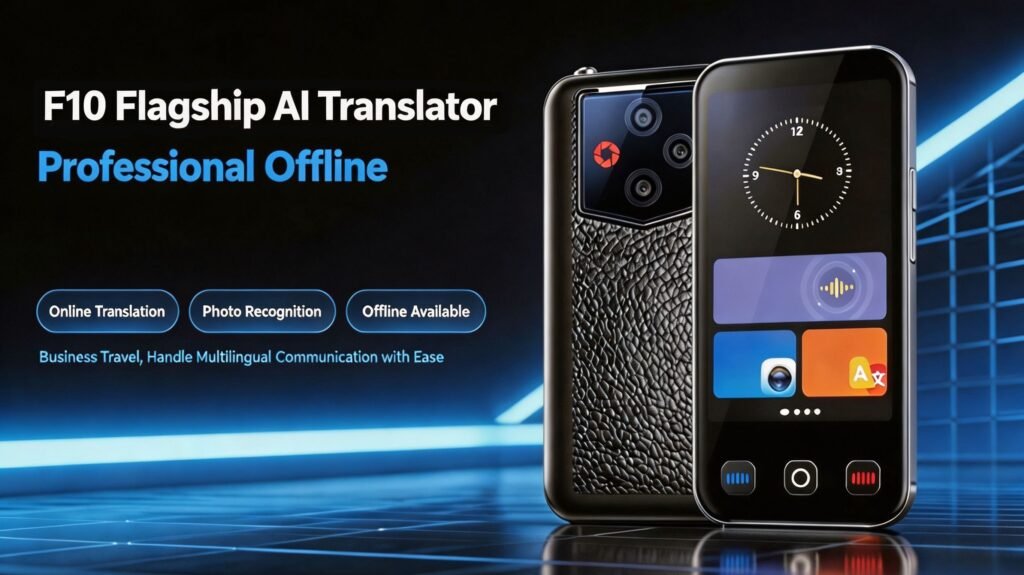
Our F10 AI Translation Device follows this broader approach.
F10 supports 139-language real-time mutual translation, 27 offline language packages, photo translation, voice recording to text, real-time voice translation and two-way simultaneous interpretation.
Its bilingual subtitle function also provides a visual translation layer, which is particularly useful when users need to confirm what was heard rather than relying only on audio.
From Translation to Communication
The larger trend is clear: AI translation is gradually moving from a simple language-conversion tool toward a multimodal communication system.
For an OEM translation-device manufacturer, this means future product development should consider more than the number of supported languages.
The user experience increasingly depends on how well a device combines speech, text, images, context and AI assistance.
For businesses developing their own translation devices, this creates opportunities to differentiate products through hardware design, software integration and scenario-specific AI functions.