
Yes. Modern AI translation devices can translate spoken language in real time.
However, voice translation involves much more than simply replacing one word with another.
A typical process includes:
Voice Capture → Speech Recognition → Language Processing → Translation → Voice/Text Output
Speech Recognition Comes First
When a person speaks, the microphone captures the sound.
The system then identifies the words and converts speech into information that the translation engine can understand.
Background noise, accents, speaking speed and microphone quality can all affect the result.
Real-Time Translation
After recognizing the speech, the AI translation engine converts it into the target language.
The translated result can then appear as text or be played through the device speaker.
This creates a natural conversation between two people who speak different languages.
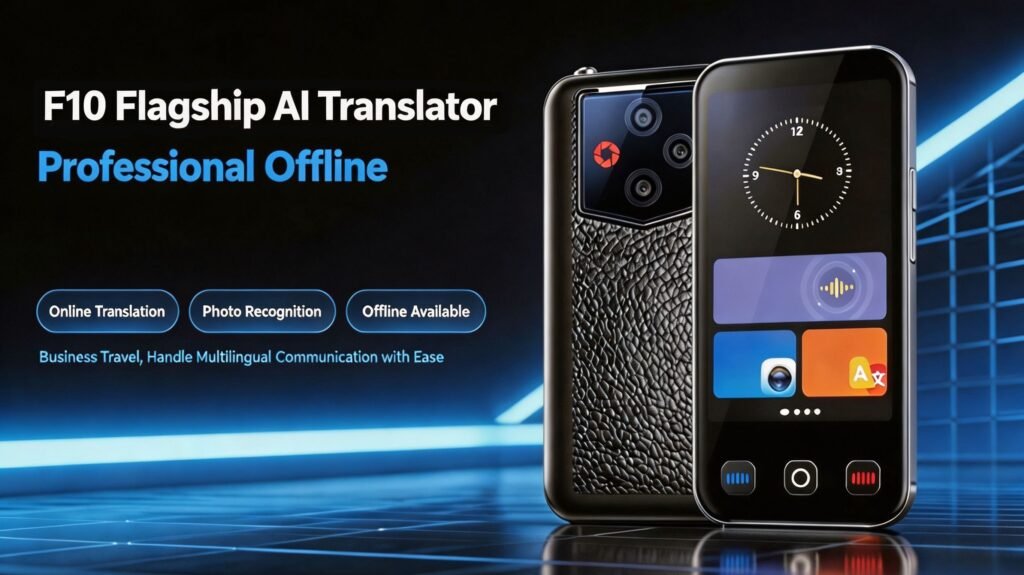
F10: Two-Way Simultaneous Translation
The F10 is designed for two-way communication.
It supports real-time bilingual translation and simultaneous interpretation, with bilingual subtitles displayed on the screen.
This makes it suitable for face-to-face conversations where both users need to follow the translated content.
The F10 also supports recording and real-time transcription, allowing conversations to be recorded, translated and replayed later.
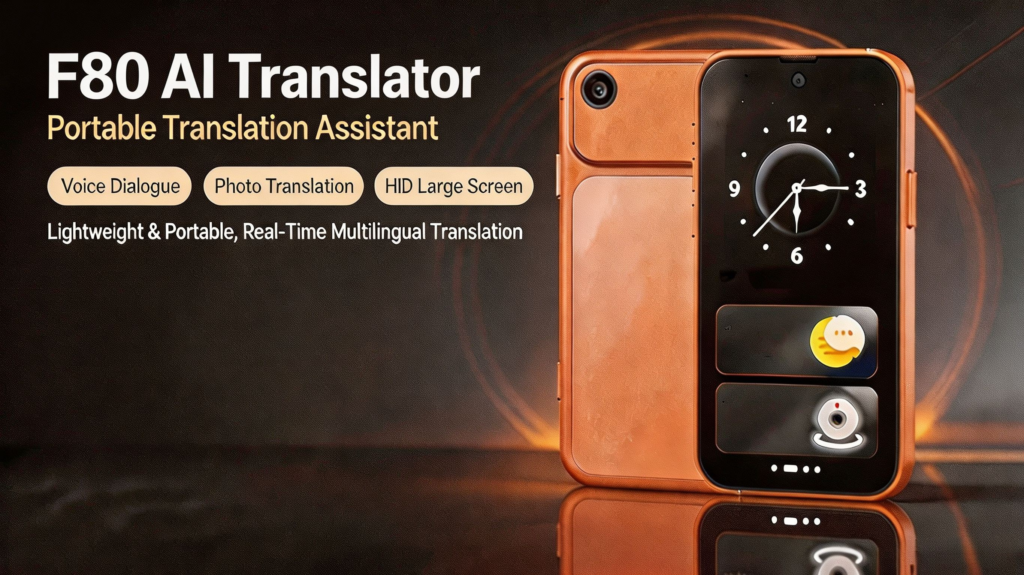
F80: Online, Offline and Video Translation
The F80 supports 150+ online translation languages and 9 dialects, as well as 27 offline languages.
It also supports video-call translation, allowing translation functionality to extend beyond traditional face-to-face conversations.
For users who frequently travel internationally or communicate with overseas customers, this creates a more flexible communication tool.
What Makes Voice Translation Difficult?
Real-world voice translation has to deal with:
- Accents
- Background noise
- Multiple speakers
- Fast speech
- Slang
- Technical terms
- Incomplete sentences
- Network latency
Therefore, translation performance depends on the entire system rather than only the AI translation model.
Conclusion
AI voice translation is becoming one of the most important functions of dedicated translation hardware.
The combination of speech recognition, AI translation, real-time subtitles and voice output allows handheld devices such as F10 and F80 to become practical multilingual communication tools.