
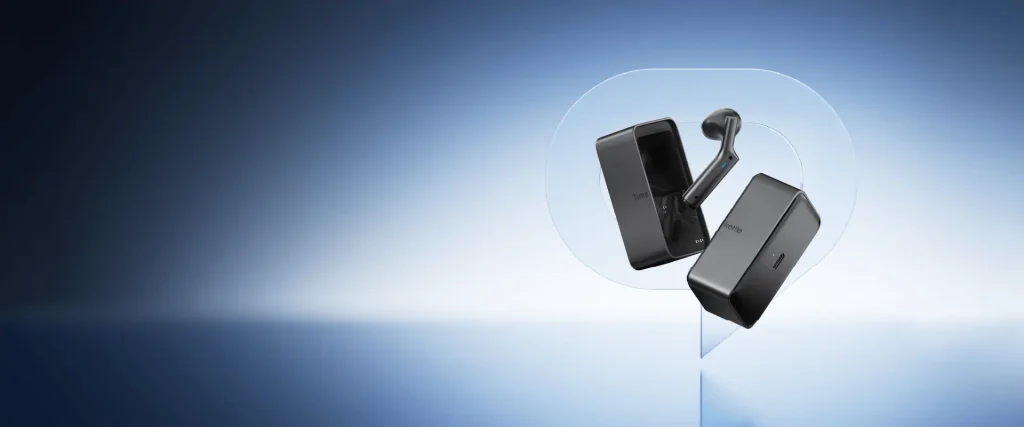
Traditional translation devices are primarily designed around one-to-one communication.
One person speaks.
The device translates.
The other person responds.
This model works well for travel and personal communication, but business environments are often much more complicated.
International conferences, corporate meetings, training sessions, exhibitions, and multinational negotiations may involve many participants speaking different languages.
This creates a new requirement:
Translation needs to work for groups, not just individuals.
From One-to-One Translation to Group Communication
Timekettle’s X1 Meeting represents this shift toward multi-user translation.
According to Timekettle, its meeting solution can support up to 50 participants and up to five languages in a meeting environment. Participants can join through a QR code or link without installing a dedicated application.
This changes the product concept.
Instead of:
One person → One translation device
the model becomes:
One meeting → One translation system → Multiple participants
From Device to System
This may become an important development path for the translation industry.
A traditional consumer translation device can be described as:
Hardware → Individual User
A professional meeting translation system is closer to:
Hardware + Software + Network + Multiple Users
The hardware is only one part of the solution.
The larger value comes from coordinating speech recognition, translation, subtitles, connectivity, and multiple users within the same environment.
Why Businesses May Need This Approach
Corporate communication creates different requirements from individual travel.
A business may want to know:
- How many participants can join?
- How many languages are supported?
- Can users join easily?
- Can the meeting be recorded?
- Can real-time subtitles be provided?
- Can the meeting be translated remotely?
- Can meeting content be summarized?
- How is translation data managed?
These questions turn translation from a consumer feature into a business workflow.
Where Handheld Translation Devices Still Fit
The growth of meeting systems does not eliminate the need for handheld translators.
Our F10 AI Translation Device is designed for individual and small-group communication.
It supports 139-language real-time translation, 27 offline language packages, two-way simultaneous interpretation, real-time bilingual subtitles, photo translation, speech-to-text recording, conversation recording, and translation playback.
For an employee visiting an overseas customer, attending a trade show, or conducting a supplier meeting, a portable device can provide an independent communication solution.
F80 Extends Translation to Remote Communication
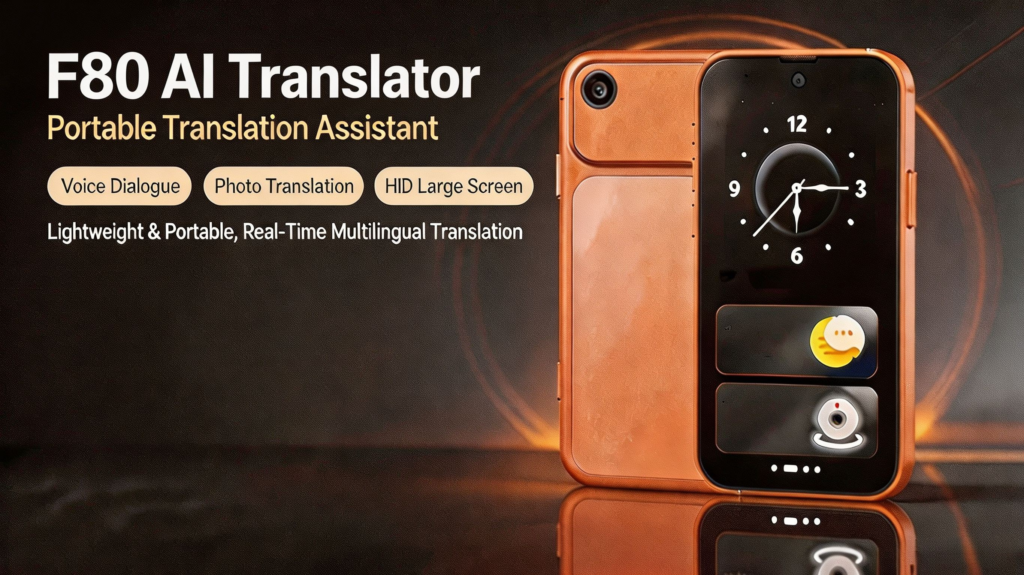
F80 is designed with connected communication in mind.
The device supports a SIM card and offers more than 150 online languages and nine dialects, along with 27 offline languages.
It also supports video-call translation, photo translation, text translation, recording translation, simultaneous interpretation, and an AI assistant.
This allows translation to move from:
Face-to-Face Communication
to:
Remote Video Communication
That distinction is increasingly relevant as international business becomes more geographically distributed.
The Next Step: AI Meeting Assistants
As multilingual meeting systems evolve, translation could become only one part of the overall solution.
Future systems may combine:
Real-Time Translation
with:
Speaker Identification
Meeting Transcription
Meeting Summaries
Key Point Extraction
Action Item Generation
Multilingual Subtitles
This would turn translation hardware into something closer to an:
AI Meeting Assistant + Translation System
At that point, the product is no longer simply a translator.
It becomes part of the company’s communication infrastructure.
Opportunities for OEM Manufacturers
This development creates several potential product categories for OEM and ODM customers:
| Product Type | Potential Application |
|---|---|
| Handheld Translator | Travel and Business Visits |
| Connected Translator | International Communication |
| AI Glasses | Hands-Free Translation |
| Translation Earbuds | One-to-One Communication |
| Meeting Translation Device | Corporate Meetings |
| Translation System | Enterprises and Large Events |
This product segmentation allows OEM manufacturers to develop different hardware solutions around different customer requirements.
Conclusion
Timekettle X1 Meeting illustrates a broader industry trend: AI translation is expanding from individual communication toward multi-user collaboration.
As international meetings, exhibitions, training sessions, and cross-border business activities become increasingly multilingual, translation systems may become an important part of professional communication infrastructure.
For OEM manufacturers, the opportunity is therefore broader than simply developing another handheld translator.
The next question may be:
How can translation hardware help an entire group communicate across languages?