
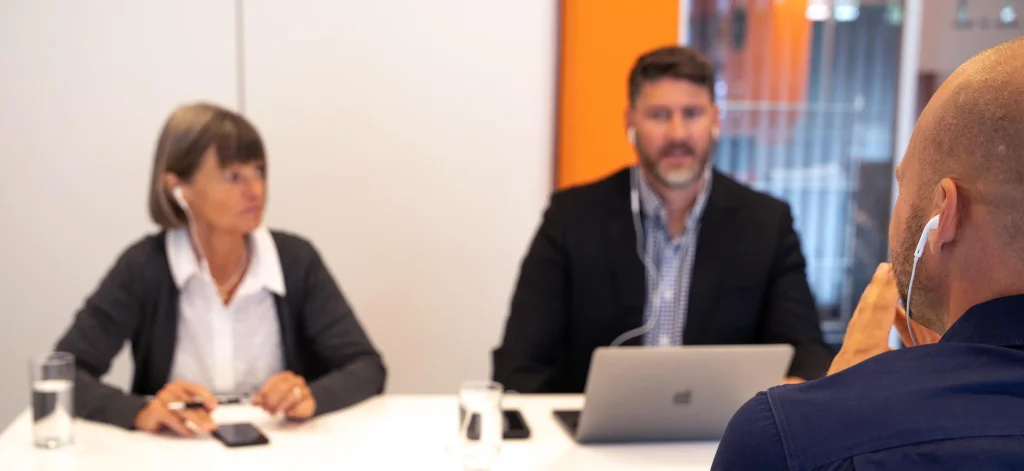
Do Multilingual Events Still Need Dedicated Hardware?
Large international events have traditionally required specialized translation equipment.
Organizers may need receivers, transmitters, interpretation booths and other equipment.
LiveVoice is exploring a different approach.
Its September 2026 platform update provides AI live translation through attendees’ existing smartphones, tablets or laptops.
The company says the system supports more than 70 languages.
Software Can Remove Some Hardware Requirements
The idea is straightforward.
Instead of giving every attendee a dedicated receiver, participants use their own devices to access the translated audio.
This changes the economics of multilingual events.
There is less physical equipment to transport, distribute, collect and maintain.
For large conferences, international meetings and multilingual presentations, this can simplify event management.
But Dedicated Translation Hardware Still Has a Role
The growth of software-based translation does not eliminate the need for dedicated translation devices.
Different environments require different solutions.
A conference with thousands of attendees may benefit from a smartphone-based system.
A business traveler visiting a factory may prefer a dedicated handheld device.
A sales representative may need a translation machine that can be passed between two people.
A hotel receptionist may want a dedicated device at the service counter.
This is where handheld translation hardware remains relevant.
The F10 Approach
The F10 is designed as a dedicated handheld translation device rather than a general-purpose smartphone application.
It provides real-time two-way translation across 139 languages and supports 27 offline language packages.
It also combines:
- Photo translation
- Recording-to-text
- Real-time bilingual subtitles
- Two-way simultaneous interpretation
- Conversation recording
- AI assistant
- World-time information
- Currency conversion
This allows one physical device to handle multiple communication tasks.
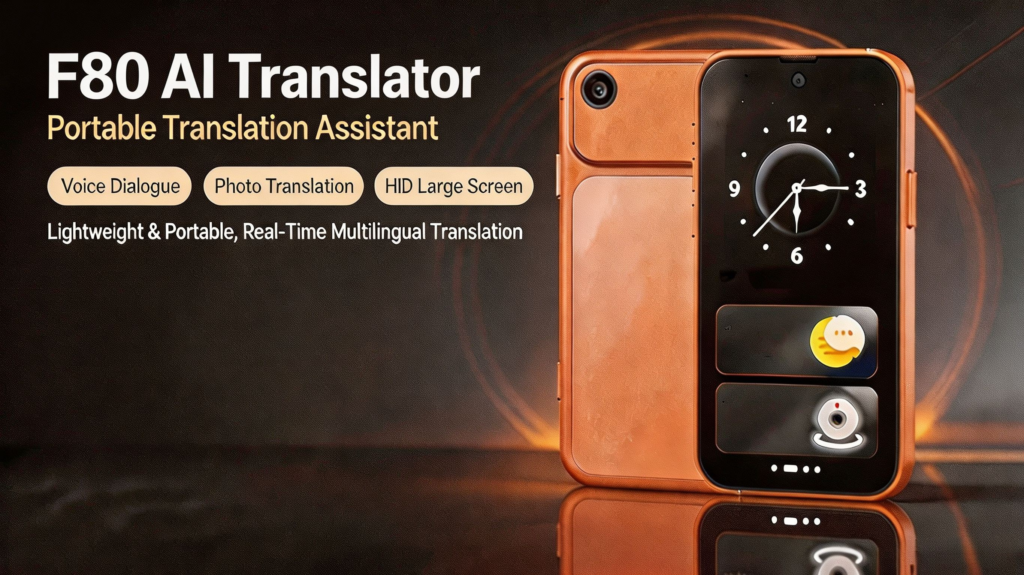
The F80 Approach
The F80 focuses on connectivity and broader online language coverage.
It supports more than 150 online languages and 9 dialects, plus 27 offline languages.
The device also supports SIM-card connectivity, video-call translation, photo translation, manual text translation and intelligent recording translation.
This creates a different product proposition from a smartphone-only translation platform.
Software and Hardware May Coexist
The development of LiveVoice illustrates an important industry reality.
Translation technology does not need to follow a single hardware model.
There are several possible approaches:
Smartphone → Personal Translation
Cloud Platform → Large-Scale Event Translation
Handheld Device → Portable Face-to-Face Translation
Specialized Hardware → Professional Communication
Each model addresses a different scenario.
What This Means for OEM Manufacturers
For translation-device manufacturers, the lesson is not that software will replace hardware.
Instead, product development should begin with the communication scenario.
Ask:
- Who is speaking?
- Who is listening?
- Is the conversation one-to-one or one-to-many?
- Is internet access guaranteed?
- Does the user need privacy?
- Is the device shared?
- Is a screen required?
- Is recording important?
The answers determine whether a smartphone, cloud platform or dedicated translation device makes the most sense.
The Future of Translation May Be Hybrid
AI translation is increasingly becoming infrastructure rather than a standalone feature.
Cloud platforms can serve large audiences.
Smartphones can provide personal access.
Dedicated translation devices can provide portable, purpose-built communication.
For OEM companies, this means there is still room to create specialized hardware for situations where convenience, offline capability, physical controls and a dedicated translation interface matter.
The future of multilingual communication may therefore involve both software platforms and specialized translation devices, rather than one replacing the other.