
Real-Time AI Is Moving Deeper Into Specialized Hardware
Artificial intelligence is increasingly moving from cloud-based software into specialized hardware.
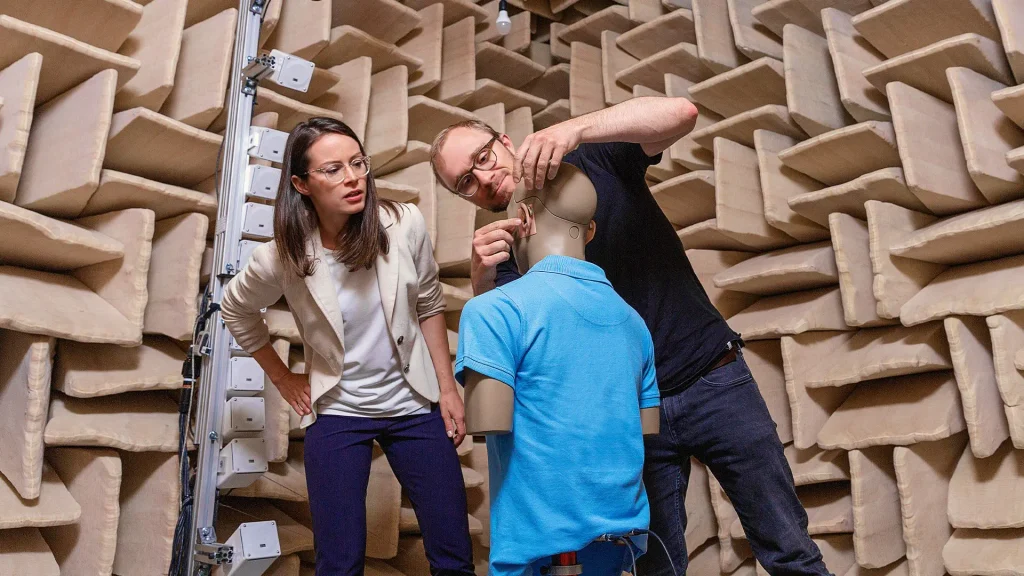
A recent example comes from Sonova, which introduced the Phonak EON portfolio in August 2026.
The new platform includes EON Sphere, which uses the company’s third-generation real-time AI technology together with a newly developed chip and retrained deep neural network.
Although the product is designed for hearing applications rather than translation, its technology direction is highly relevant to the translation-device industry.
The reason is simple: translation starts with understanding speech.
Speech Recognition Is the First Step of Translation
A translation device cannot produce a good translation if it cannot clearly understand what the speaker is saying.
Real-world environments are rarely quiet.
People speak in factories, airports, conference rooms, restaurants, vehicles and outdoor locations.
Background noise, multiple speakers, distance from the microphone and different speaking styles can all affect speech recognition.
This means future translation hardware will need to pay more attention to audio processing before translation even begins.
What Phonak EON Demonstrates
According to Sonova, EON combines real-time AI with a retrained deep neural network to improve speech clarity and reduce listening effort.
The company also reports improvements in power efficiency and device size.
This demonstrates an important hardware trend:
AI performance and physical product design increasingly need to improve together.
A more capable AI system is not enough if the device is difficult to carry, slow to respond or inefficient.
What This Means for Translation Devices
The same principle applies to handheld AI translation devices.
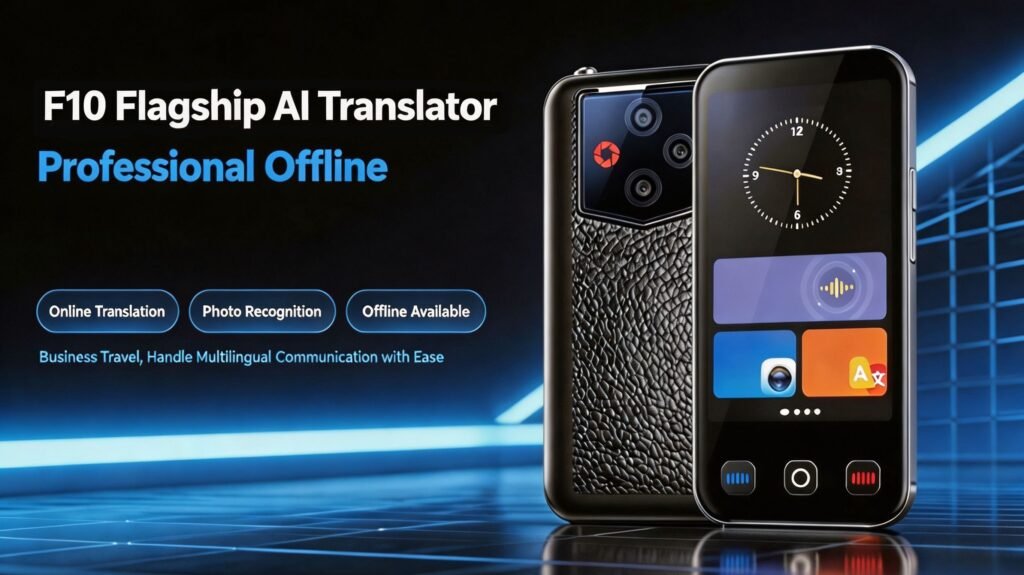
For example, the F10 is designed around real-time voice translation and two-way simultaneous interpretation.
It also provides real-time bilingual subtitles, recording-to-text and conversation playback.
The F80 takes a broader communication approach, combining real-time translation with video-call translation, photo translation and recording translation.
In both cases, the microphone, audio processing, translation engine and user interface need to operate as one system.
Why Audio Processing Matters for OEM Development
For OEM manufacturers, this creates several areas where product development can make a difference.
Better Voice Capture
A translation device should capture speech clearly even when the surrounding environment is busy.
Noise Processing
Background sounds can affect speech recognition and therefore influence the translation process.
Real-Time Processing
Conversation translation needs to keep pace with natural dialogue.
Power Efficiency
AI processing can increase hardware requirements, making energy efficiency important for portable products.
Compact Hardware
International travelers and business users usually prefer devices that can be carried easily.
From Translation Engines to Complete AI Systems
The evolution of products such as Phonak EON suggests that specialized AI hardware is becoming more sophisticated.
For translation devices, this could mean that future product differentiation will not come only from the number of languages supported.
Manufacturers may increasingly compete through the complete speech-processing chain:
Voice Capture → Noise Processing → Speech Recognition → Translation → Voice Output → Display
The F10 and F80 already combine several stages of this workflow in portable hardware.
For OEM and ODM developers, improving the entire chain may therefore be just as important as selecting a powerful translation model.
As AI becomes more deeply integrated into hardware, translation devices can evolve from simple language-conversion tools into intelligent communication systems designed for real-world environments.