
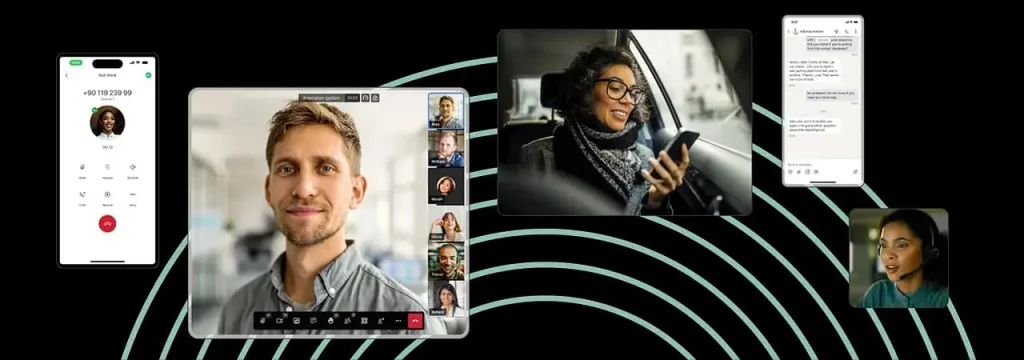
Enterprise communication is becoming another major application area for real-time AI translation.
In June 2026, 8×8 introduced live simultaneous voice translation in 8×8 AI Studio, allowing customers and agents to speak their own languages while the system translates the conversation in real time.
The feature was introduced in early availability across 13 languages.
Translation Without Changing the Call
One of the interesting aspects of this approach is that translation is integrated directly into the existing communication flow.
The customer does not need to leave the call.
The agent does not need to open another application.
There is no requirement to transfer the customer to a separate interpreter.
The system processes both sides of the conversation and provides translated audio in real time.
This represents a broader trend toward embedded translation.
Embedded Translation vs Dedicated Devices
Embedded translation is particularly useful when businesses already operate inside a digital communication platform.
However, physical translation devices continue to provide another type of value.
Consider an international factory visit.
The participants may not be using the same software.
They may be standing beside machinery.
They may need to translate a product label or photograph.
They may need to continue communicating while walking around a facility.
In these situations, a dedicated translation device can be more flexible.
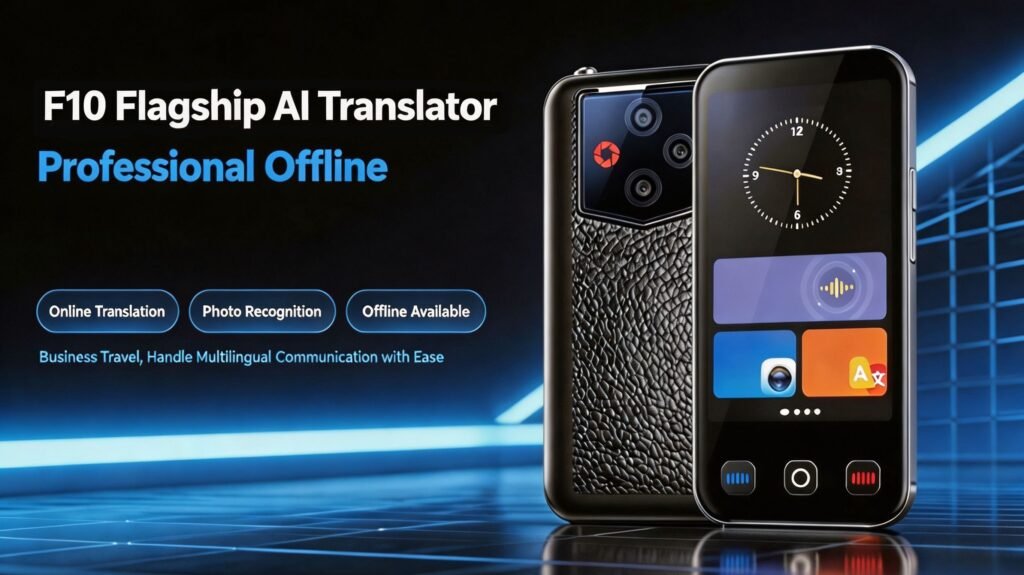
F10: Multimodal Translation in One Device
Our F10 AI Translation Device combines several translation modes.
It supports:
- 139-language real-time translation
- 27 offline languages
- Photo translation
- Recording-to-text
- Real-time voice translation
- Two-way simultaneous interpretation
- Real-time bilingual subtitles
- Conversation recording and translated playback
- AI assistant
This allows the device to support communication beyond a single phone call.
F80 Adds Connectivity
F80 supports more than 150 online languages and nine dialects.
It also supports SIM-card connectivity and 27 offline languages.
Other functions include:
- Video-call translation
- Photo translation
- Text-input translation
- Recording translation
- Simultaneous interpretation
- AI assistant
The result is a portable communication device that can operate across several different scenarios.
The Industry Is Moving Toward “Invisible Translation”
The development of 8×8 AI Studio reflects an important industry trend.
Translation is becoming less visible.
Users may not think about “opening a translation application.”
Instead, translation can happen inside:
- Phone calls
- Video conferences
- Customer-service platforms
- AI assistants
- Wearable devices
- Dedicated translation hardware
This could make multilingual communication more natural.
For OEM manufacturers, it also means that hardware should be designed to complement existing communication ecosystems.
A translation device may need to work independently, but it can also become an interface between users and cloud-based translation services.
What OEM Customers Can Learn
For companies developing customized translation devices, the lesson is not simply to add more languages.
A competitive product may need to answer several questions:
Where will translation happen?
How will users hear the result?
How will they see it?
What happens when there is no internet?
Can the conversation be recorded?
Can images and text also be translated?
These questions turn an AI translation device from a simple language converter into a broader communication platform.