
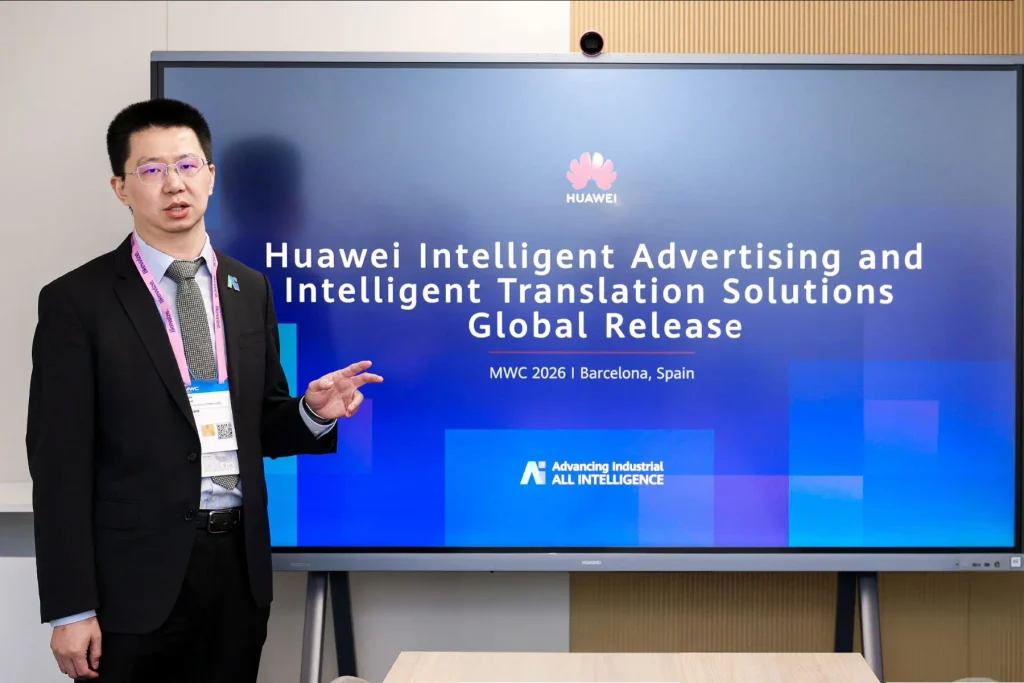
Translation technology has traditionally been associated with software applications and dedicated hardware.
A user needs a smartphone, translator, headset, or another device capable of running a translation service.
Huawei’s 2026 developments point toward a different possibility:
Translation can become part of the communication network itself.
At MWC Barcelona 2026, Huawei introduced intelligent translation solutions designed to support global communication. The company also highlighted a New Calling translation service developed with stc that combines low-latency network capabilities with an optimized speech model for Arabic and English.
From Translation Device to Translation Service
This is an important distinction.
A traditional translation device works independently:
Person → Device → Translation
A network-level translation service can work differently:
Person → Communication Network → AI Translation → Other Person
The translation capability becomes part of the communication infrastructure.
This could eventually allow people to communicate across languages without purchasing a dedicated translation device.
Why Telecom Networks Matter
Real-time speech translation requires more than a translation model.
It also requires:
- Fast speech transmission
- Reliable connectivity
- Low latency
- Speech recognition
- Translation
- Voice generation
- Network optimization
Telecom operators already control much of the communication infrastructure required for these processes.
This creates an opportunity to integrate translation directly into calling services.
Imagine making an international call where the two participants speak different languages.
Instead of opening a separate translation application, the network could automatically provide translated speech.
The communication experience would remain a normal phone call.
Arabic-English Translation as a Practical Example
Huawei and stc have demonstrated a New Calling translation service designed for real-time Arabic-English voice translation.
The service is being piloted in Riyadh and uses network capabilities together with speech AI technology.
The significance goes beyond the specific language pair.
Arabic and English are widely used across international business, tourism, government, finance, and cross-border communication.
A network-based translation service could therefore have practical value in markets where multilingual communication is part of everyday business.
Does This Replace Translation Hardware?
Not necessarily.
Network translation and dedicated translation hardware can serve different users.
A network service is ideal when users are already making calls.
A dedicated translation device can be more useful when people are:
- Meeting face-to-face
- Traveling
- Working offline
- Communicating at exhibitions
- Translating images
- Recording conversations
- Using bilingual subtitles
- Communicating without relying on a specific telecom provider
This is why dedicated AI translation devices can remain relevant even as translation becomes embedded into smartphones and networks.
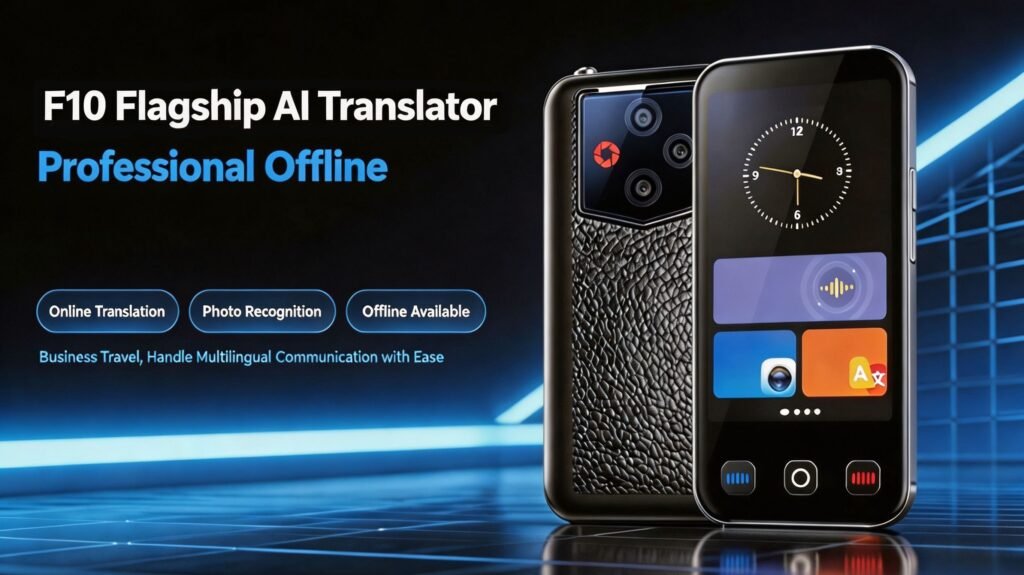
F10: Dedicated Translation Beyond Phone Calls
Our F10 AI Translation Device focuses on direct communication rather than telecom-level calling.
It supports 139-language real-time translation and 27 offline language packages.
Users can also access:
- Photo translation
- Voice translation
- Speech-to-text recording
- Two-way simultaneous interpretation
- Real-time bilingual subtitles
- Conversation recording
- Translation playback
- AI assistance
This creates a communication tool that does not depend on a specific calling service.
F80 Combines Translation With Connectivity
F80 provides another approach.
The device supports SIM-card connectivity, more than 150 online languages, nine dialects, and 27 offline languages.
It also supports video-call translation.
This creates a bridge between traditional translation hardware and connected communication services.
A user can communicate through the device while using its translation functions as part of the same experience.
A Larger Trend in the Translation Industry
Huawei’s developments highlight a broader trend:
AI translation is becoming infrastructure.
Translation can increasingly appear in:
- Smartphones
- Phone calls
- AI glasses
- Earbuds
- Handheld translators
- Conference systems
- Telecom networks
- Enterprise communication platforms
This means the translation industry is expanding beyond dedicated translation products.
For OEM manufacturers, this does not necessarily represent a threat.
Instead, it creates more opportunities to develop specialized hardware for situations where general-purpose communication systems are not enough.
OEM Opportunities
The next generation of translation products could combine:
Hardware + AI + Connectivity
OEM customers may want products designed for:
- International business
- Tourism
- Logistics
- Healthcare
- Government communication
- Cross-border customer service
- International education
The hardware could provide the physical interface while cloud and network services provide the intelligence.
Conclusion
Huawei’s intelligent translation and New Calling developments demonstrate how AI translation can move beyond standalone applications.
As AI becomes more deeply integrated into communication networks, translation may eventually become as invisible as voice calling itself.
For translation device manufacturers, this creates an important challenge and opportunity:
Dedicated hardware must provide capabilities that general communication platforms cannot easily replace.
Offline translation, specialized interfaces, recording, visual translation, dedicated controls, and purpose-built communication workflows may therefore become increasingly valuable.