

AI translation hardware is becoming increasingly diverse.
Instead of developing only dedicated translation machines, technology companies are beginning to integrate translation into different forms of AI hardware.
At WAIC 2026, Alibaba introduced Qwen Clip, its first Qwen-powered earbuds. According to Alibaba, the device uses a clip-on open-ear design and supports real-time translation, meeting transcription and health tracking. The product was co-engineered with Bose.
Translation Becomes One Function Among Many
One important characteristic of Qwen Clip is that translation is not positioned as the only function.
The device combines:
- AI assistant
- Real-time translation
- Meeting transcription
- Open-ear audio
- Health-related functions
This reflects a broader trend in AI hardware.
Instead of selling a device around one isolated function, manufacturers are increasingly trying to create multifunctional AI assistants that can handle several communication and productivity tasks.
What Does This Mean for Dedicated Translation Devices?
For translation-device manufacturers, this trend creates both competition and opportunities.
A dedicated AI translation device can focus more deeply on translation workflows.
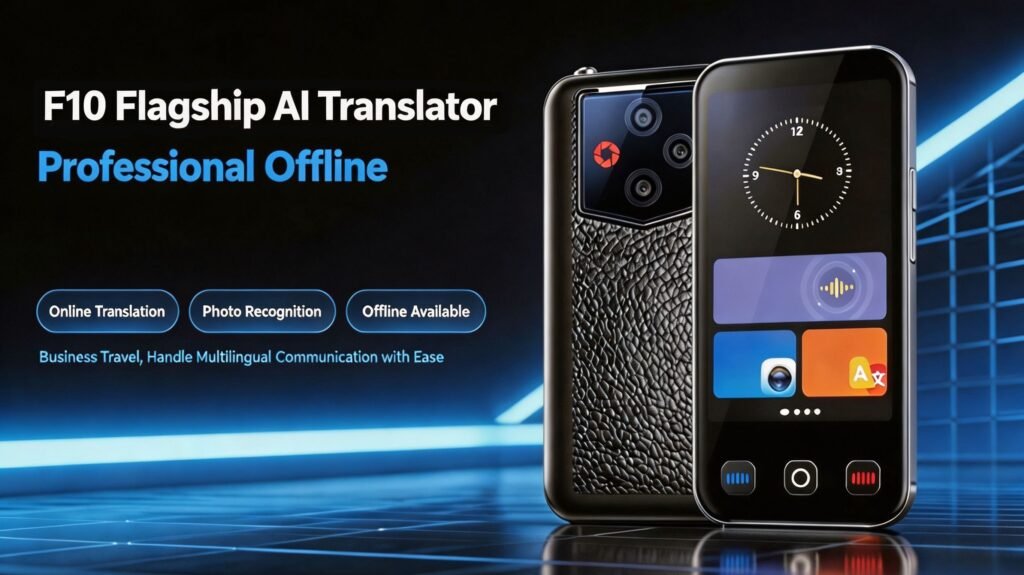
For example, F10 provides 139-language real-time translation, 27 offline language packages, photo translation, recording-to-text, conversation recording and playback, bilingual subtitles, simultaneous interpretation and an AI assistant.
This allows the device to function as a dedicated communication tool rather than simply an audio accessory.
Hardware Form Factor Matters
The development of products such as Qwen Clip also highlights an important question for OEM customers:
What is the best hardware form for a specific translation scenario?
A wearable may be convenient when users want hands-free interaction.
A smartphone-style translation device can provide a larger visual interface.
A dedicated handheld translator can also combine translation with recording, photo translation, offline language packages and other functions.
This is why hardware design remains an important part of OEM product development.
The Opportunity for OEM Development
The future of AI translation hardware may not be represented by one single product category.
Instead, we may see:
- Handheld translation devices
- AI earbuds
- Smart glasses
- Smartphones
- AI assistants
- Network-based translation services
Each format can serve different user scenarios.
For an OEM/ODM manufacturer, the opportunity is therefore not simply to build another translator.
It is to identify a communication problem, select the appropriate hardware form, integrate the necessary AI functions and create a product that fits the customer’s target market.