
AI translation is increasingly moving from consumer applications into professional working environments.
A recent example comes from South Korea’s Daewoo E&C.
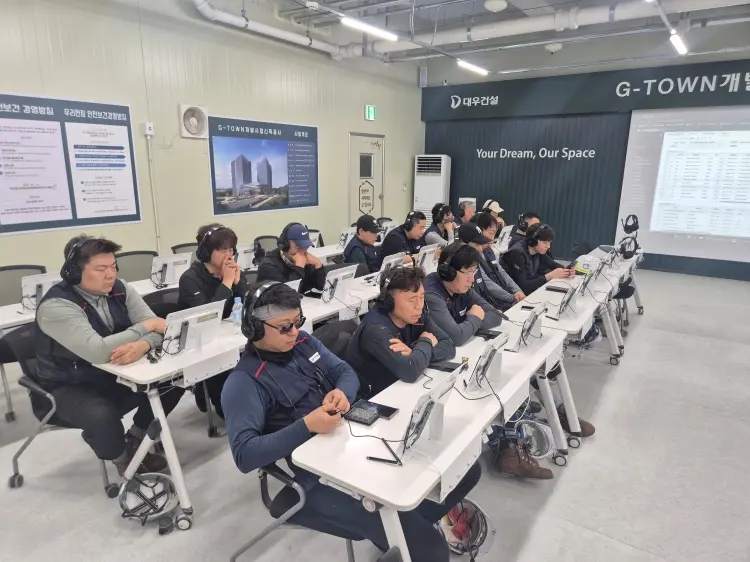
On September 15, 2026, Daewoo E&C announced that it would expand the standardized use of an AI real-time translation system across its domestic construction sites.
Translation for Workplace Safety
According to Daewoo E&C, the system translates Korean safety instructions into foreign workers’ languages in real time and provides the information through both screen and voice output.
The company said the system supports 16 languages.
The technology is being used not only during digital safety training but also in meeting rooms and other training areas.
This is an important development because it demonstrates that translation technology is not simply about travel convenience.
It can also become part of a company’s operational infrastructure.
Why Industrial Translation Is Different
Industrial translation often has different requirements from consumer translation.
Workers may need to understand:
- Safety instructions
- Equipment operation
- Work procedures
- Emergency information
- Daily task assignments
- Technical terminology
In these situations, translation needs to be fast, easy to operate and available in the actual workplace.
According to Daewoo E&C, its pilot operation showed a Korean speech-recognition accuracy of 94.6%, while the company reported improvements in worker understanding and reductions in repeated safety explanations.
These figures are Daewoo E&C’s reported results, rather than an independent industry benchmark.
What This Means for OEM Translation Devices
This type of application provides an important reference for translation-device manufacturers.
A successful B2B translation device does not necessarily need to target only tourists.
Other potential markets include:
Construction
Multilingual workers may need translated safety instructions and work communication.
Manufacturing
Factories with international employees can use translation devices during training and production communication.
Hospitality
Hotels and tourism businesses can use translation devices for international guests.
International trade

Sales teams can use translation devices during exhibitions, factory visits and customer meetings.
Our F10 and F80 devices are designed around these broader communication scenarios.
F10 combines 139-language real-time translation with 27 offline language packages, recording translation, photo translation, bilingual subtitles and two-way interpretation.
F80 adds SIM-card connectivity, 150+ online languages, nine dialects, 27 offline languages, video-call translation and recording translation.
From Consumer Gadget to Business Tool
The Daewoo E&C case demonstrates a broader change in the translation-device market.
The value of an AI translator is increasingly determined by where it can solve a real communication problem.
For OEM customers, this means product development can focus on specific industries instead of building a generic translation product for everyone.