

The development of AI translation is not limited to translation devices.
Telecommunications companies are also exploring ways to integrate translation directly into communication infrastructure.
In February 2026, T-Mobile announced a network-integrated Live Translation service. The company said eligible customers would be able to translate phone calls in more than 50 languages in real time without requiring a separate application, device upgrade or special translation hardware.
From Device-Level Translation to Network-Level Translation
Traditionally, real-time translation has often required a smartphone application or a dedicated translation device.
T-Mobile’s approach is different.
The translation capability is integrated into the network, allowing the phone call itself to become the communication interface.
This illustrates an important industry trend:
Translation is becoming part of the communication infrastructure rather than remaining a standalone function.
For consumers, this could reduce the number of additional devices required for basic multilingual conversations.
Does This Replace Dedicated Translation Devices?
Not necessarily.
Network-based translation has an obvious advantage in ordinary phone calls, but dedicated AI translation devices can provide a broader set of functions.
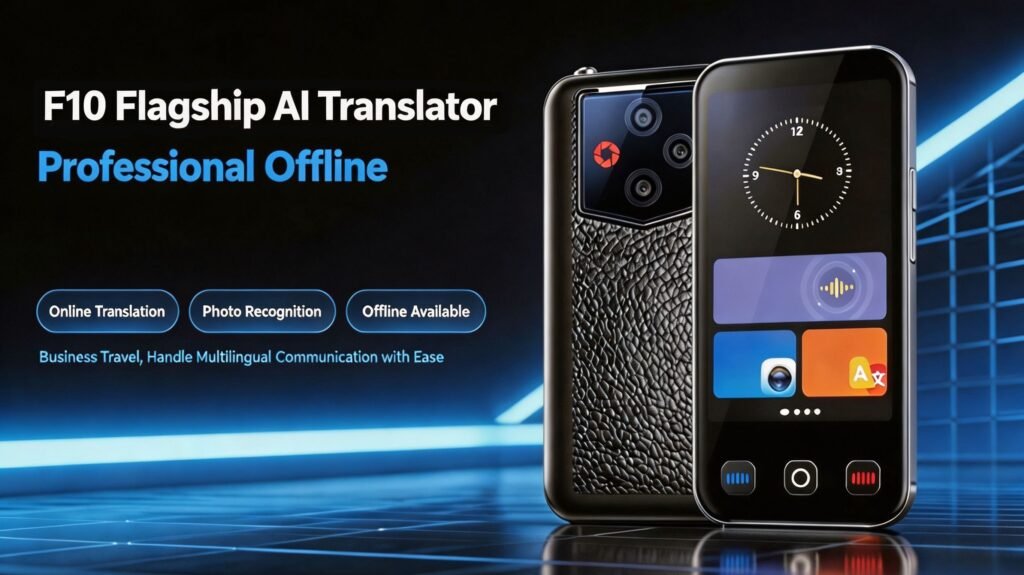
For example, our F10 AI Translation Device supports:
- Real-time voice translation
- 139-language translation
- 27 offline languages
- Photo translation
- Recording-to-text
- Conversation recording and translation playback
- Two-way simultaneous interpretation
- Real-time bilingual subtitles
- AI assistant
- Currency conversion
These functions cover situations that are not limited to telephone conversations.
A person visiting a factory, negotiating with an overseas buyer, attending an international exhibition or communicating face-to-face with a customer may need a standalone translation device.
Offline Translation Remains Important
One important distinction is connectivity.
Network-based translation naturally depends on communication infrastructure.
Dedicated translation hardware can provide another layer of flexibility through offline translation.
F10 includes 27 offline language packages, allowing users to access offline translation capabilities when internet connectivity is unavailable or inconvenient.
F80 provides another approach by supporting SIM-card connectivity together with online and offline translation.
A Larger Translation Ecosystem
The industry may therefore develop along several parallel paths:
Mobile network translation for phone calls.
Smartphone translation for everyday users.
Wearable translation for hands-free communication.
Dedicated translation devices for travelers, businesses and professional scenarios.
For OEM manufacturers, this creates opportunities to build specialized products rather than attempting to compete with smartphones in every scenario.