

AI Translation Is Moving Closer to Everyday Communication
Real-time translation is no longer limited to dedicated applications or traditional interpretation services. New AI-powered communication systems are beginning to place translation directly into everyday communication channels.
One recent example is ThunderPhone’s TranslateMyCall, introduced in September 2026. Instead of asking users to install a dedicated application, the service uses a regular phone number to provide AI-powered interpretation.
The concept is straightforward: users can call the service, connect another person to the conversation, and speak naturally in different languages. The system translates the conversation in both directions.
According to ThunderPhone, TranslateMyCall currently provides full support for 47 languages, with additional languages available with reduced quality.
Why Phone-Based Translation Matters
The significance of this approach is not simply the number of supported languages.
The bigger development is the reduction of technical barriers.
A user does not necessarily need a new application, complicated account setup, or specialized software. This makes AI interpretation easier to integrate into situations such as customer service, international business communication, healthcare communication, and everyday conversations.
For businesses, this also highlights an important direction for translation technology: translation should become part of the communication process rather than a separate task.
What This Means for Translation Devices
The same principle applies to dedicated handheld translation devices.
A translation machine should not require users to repeatedly switch between applications, manually configure complicated settings, or interrupt conversations unnecessarily.
This is why modern translation devices increasingly combine several functions in one product.
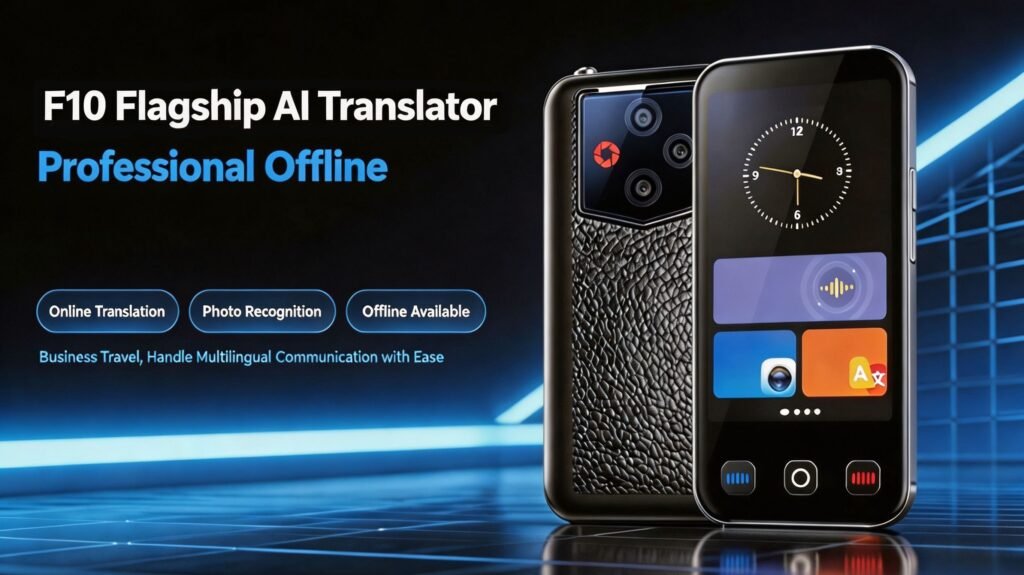
For example, the F10 AI Translation Device combines real-time two-way translation with bilingual subtitles, recording-to-text, photo translation and an integrated AI assistant.
The F10 supports real-time translation across 139 languages, while 27 language packages can be used offline. This combination is designed for situations where users need both connectivity-based translation and more independent offline communication.
The F80 AI Translation Device takes another approach by supporting SIM-card connectivity, more than 150 online languages and 9 dialects, together with 27 offline languages.
These capabilities show how handheld translation devices can provide a dedicated communication interface instead of relying entirely on a user’s smartphone.
From Translation Tool to Communication Interface
TranslateMyCall also demonstrates an important shift in the industry.
The goal of AI translation is gradually changing from simply converting one sentence into another language toward supporting the entire conversation.
For a translation-device manufacturer, this means hardware design, microphones, software interfaces, connectivity and translation engines all need to work together.
The most useful device may not necessarily be the one with the longest specification list. It is the device that minimizes interruptions between people.
What OEM Buyers Should Watch
For companies developing their own translation devices, several areas deserve attention:
- Real-time two-way communication
- Clear voice capture
- Fast speech recognition
- Multiple translation modes
- Offline language support
- Recording and playback
- SIM or cellular connectivity
- Bilingual screen presentation
- AI assistant integration
These functions can create different product tiers for travel, business, education, hospitality and international trade.
As AI interpretation becomes easier to access, dedicated translation hardware still has an important role: giving users a purpose-built, portable interface for multilingual communication.
The next generation of translation devices will likely focus less on being a simple “translator” and more on becoming a portable communication assistant.