

Language barriers are particularly difficult for customer-service organizations.
A company may have customers across dozens of countries, but maintaining dedicated agents for every language can be difficult.
In September 2026, Zendesk introduced Real-Time Voice Translation for Zendesk Contact Center, allowing customers and agents to communicate in different languages during live calls.
The system provides two-way AI translation, allowing the customer and agent to speak their preferred languages during the same conversation.
Translation Becomes Part of the Customer-Service Workflow
Traditionally, multilingual customer service may involve:
- Finding an agent who speaks the required language.
- Transferring the customer.
- Bringing in an interpreter.
- Asking the customer to switch to email or messaging.
Real-time voice translation offers another approach.
The customer can continue speaking their preferred language while the agent communicates in another language.
Zendesk said the feature is intended to reduce the need for language-specific queues and third-party interpreters.
Thirteen Languages at Early Access
Zendesk announced support for Chinese, English, French, German, Hindi, Indonesian, Italian, Japanese, Korean, Portuguese, Russian, Spanish and Vietnamese for the initial capability. The company said the feature would enter a closed Early Access Program in October 2026 for eligible customers.
The development demonstrates that translation is becoming an operational capability rather than simply a consumer convenience.
What This Means for Translation Devices
The same principle can be applied to physical AI translation devices.
A business does not necessarily need translation only in a call center.
International companies may need multilingual communication at:
- Factory reception areas
- Trade shows
- Sales meetings
- Hotel front desks
- Retail stores
- Warehouses
- Construction sites
- Customer visits
Our F10 AI Translation Device is designed for face-to-face communication and supports 139-language real-time translation.
Its bilingual subtitle function allows users to see translated information while listening to the translated voice.
F10 also supports two-way simultaneous interpretation, recording-to-text and conversation recording.
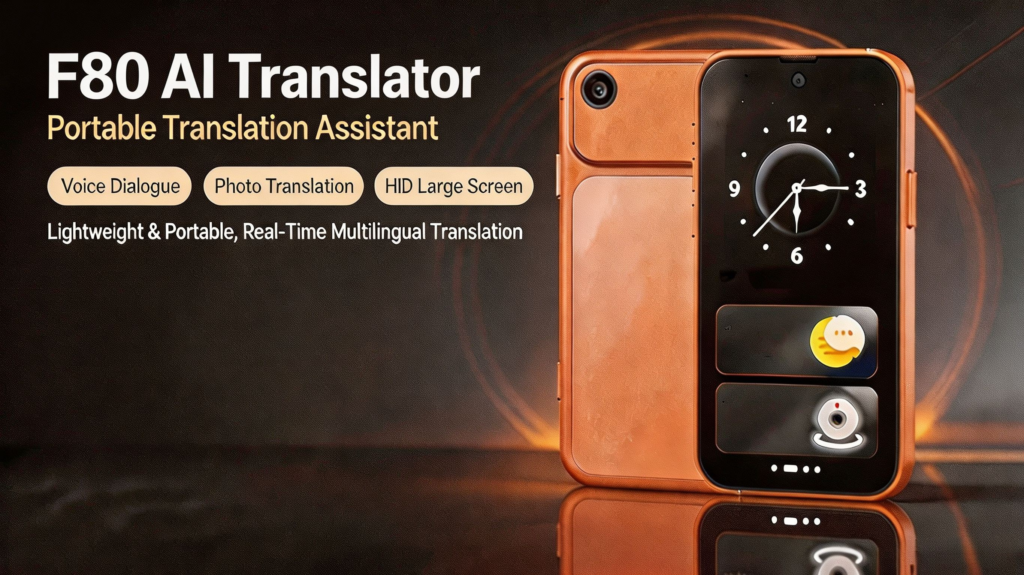
F80 for Mobile Business Communication
F80 provides another configuration for mobile business communication.
The device supports more than 150 online languages and nine dialects, plus 27 offline languages.
Its SIM-card support can provide greater independence from a user’s primary smartphone, while video-call translation extends the device beyond face-to-face conversations.
From Language Barrier to Workflow Problem
Zendesk’s development highlights an important shift in enterprise translation.
The question is increasingly not:
“Can AI translate this sentence?”
Instead, businesses are asking:
“Can AI remove the language barrier from this entire workflow?”
That distinction matters for OEM manufacturers.
A translation device can be designed around a particular workflow rather than simply offering a long language list.
For example, an industrial translation device can prioritize safety communication.
A hospitality device can focus on reception and customer service.
A business translation device can emphasize meetings, recording and terminology.
This approach creates opportunities for customized translation hardware designed for specific industries.